
The Doctor's Practice Has Changed More in Five Years Than in the Previous Decade
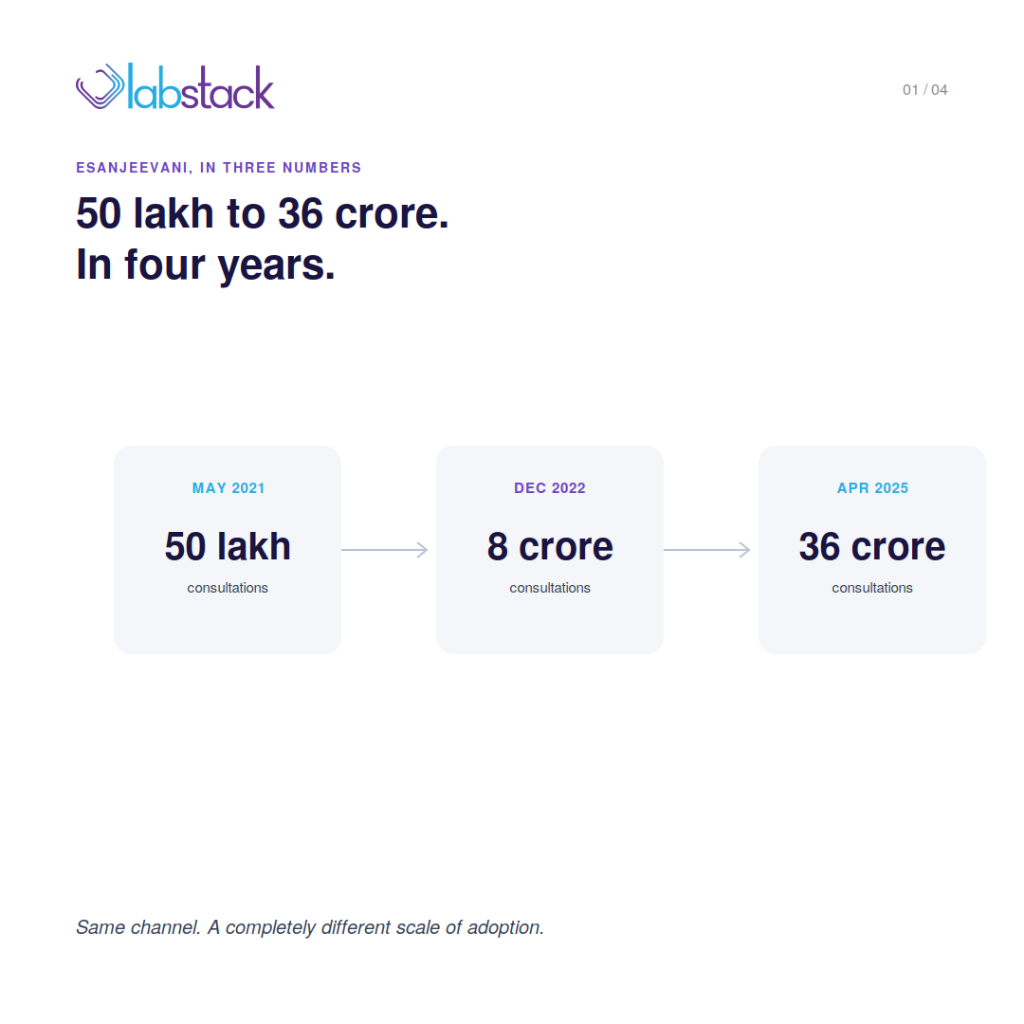
In 2020, digital healthcare in India was still largely an emerging layer around traditional healthcare. Then COVID-19 forced one of the fastest changes the industry had seen. Telemedicine in India went from an alternative way to consult a doctor to a mainstream channel almost overnight. India's national telemedicine service, eSanjeevani, had crossed 50 lakh consultations by May 2021. By December 2022, that number had reached 8 crore. By April 2025, it had crossed 36 crore consultations — a pace of telemedicine growth in India that few expected even inside the industry. In roughly four years, a healthcare channel that was barely part of everyday medical practice had reached hundreds of millions of consultations.
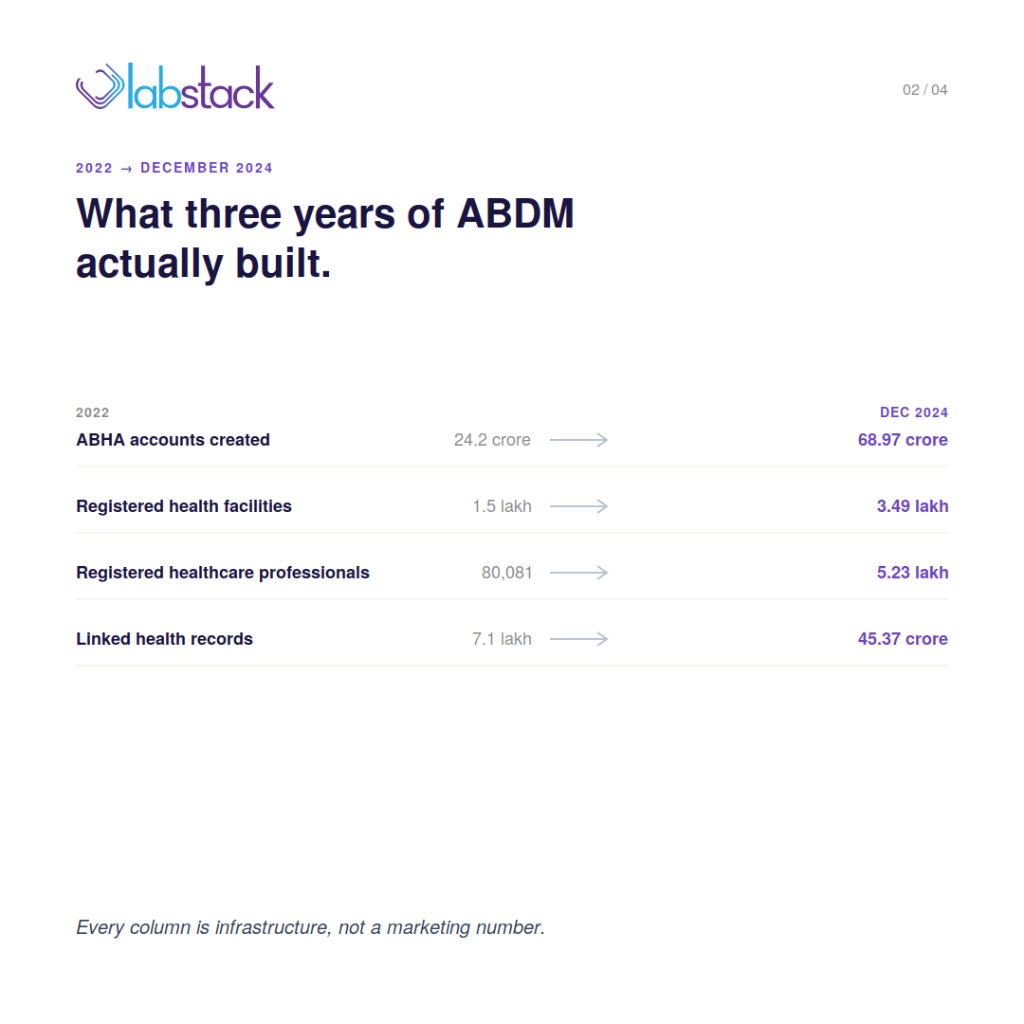
That shift was not just about video consultations. It changed what patients expected from healthcare and accelerated the healthcare digitisation in India already under way around doctors. Appointments could happen online, medical information could be stored digitally and healthcare providers could begin participating in a national digital health infrastructure in India rather than operating entirely through isolated systems. The scale of this change becomes clearer through the numbers: when ABDM was being scaled in 2022, around 24.2 crore ABHA accounts, 1.5 lakh health facilities, 80,081 healthcare professionals and 7.1 lakh linked health records had been recorded. By December 2024, ABDM reported 68.97 crore ABHAs, 3.49 lakh registered health facilities, 5.23 lakh registered healthcare professionals and 45.37 crore linked health records.
From Millions of Teleconsultations to a National Digital Health Infrastructure
The change in telemedicine alone shows how telemedicine has changed healthcare in India. eSanjeevani went from 50 lakh consultations in early 2021 to more than 36 crore by April 2025. That is not incremental adoption. It represents a healthcare system becoming comfortable with the idea that a teleconsultation in India does not always require the patient and doctor to be in the same physical location.
The infrastructure supporting doctors has expanded at the same time. By September 2023, eSanjeevani had grown from 397 operational hubs in 2020 to 14,036, while its connected spokes increased from 6,868 to 108,610. The number of registered medical practitioners who had provided online doctor consultation in India through the platform reached 29,114. The shift was therefore not simply an increase in patient demand for virtual healthcare in India. It involved the rapid expansion of the digital healthcare infrastructure required to connect healthcare professionals with patients across locations.

India's Digital Health Numbers Have Moved From Lakhs to Crores
Ayushman Bharat Digital Mission shows an even larger transformation because it extends beyond telemedicine. The mission was launched nationally in September 2021 to create an integrated digital healthcare ecosystem. By March 2026, 86.96 crore ABHA accounts had been created, with 4.86 lakh health facilities and 8.35 lakh healthcare professionals registered under the system.
The numbers show the scale of the underlying shift. Digital healthcare is no longer a collection of individual apps offering appointments or video consultations. There is now national infrastructure intended to connect doctors, clinics, hospitals, laboratories, pharmacies and patients — the practical answer to what the Ayushman Bharat Digital Mission actually set out to build. ABDM's healthcare ecosystem and its Health Facility Registry covers these different categories, while its Personal Health Record framework is designed to allow a patient's health information to be collected from multiple facilities and managed with the patient's control and consent — which is also close to what ABHA is meant to anchor for every individual.
The Patient's Medical Record Is Starting to Move With the Patient
This is one of the quieter changes behind the digital-health numbers.
In a fragmented healthcare system, a patient's medical history can remain distributed across different hospitals, clinics and diagnostic laboratories. The patient often becomes the link between them, carrying reports, prescriptions and previous medical information from one provider to another — the exact gap that digital health records in India are meant to close.
ABDM is changing the infrastructure underneath that process. By December 2024, more than 45 crore health records under ABDM had already been linked with ABHA. By April 2025, the government reported that number had crossed 52 crore ABHA health records — an early sign of what genuinely interoperable health records at national scale can look like, rather than just a larger archive of electronic health records in India.
That means the digital transformation is moving beyond simply making the appointment digital. The larger change is making health information portable across the healthcare journey, subject to the patient's consent — a working, national-scale example of longitudinal health records that follow the person rather than the provider.
Five Years Ago, Digital Healthcare Meant Access. Today, It Increasingly Means Connectivity.
This is where the numbers become more interesting.
Telemedicine scaled from millions to hundreds of millions of consultations. ABHA accounts moved into the tens of crores. Registered healthcare facilities moved from around 1.5 lakh in 2022 to 4.86 lakh by March 2026. Registered healthcare professionals increased from around 80,000 in 2022 to more than 8.35 lakh. Linked health records moved from roughly 7 lakh to more than 52 crore over the same broad period.
These numbers describe a fundamental change in the structure of Indian healthcare — the shift from digital transformation in healthcare as isolated tools toward healthcare interoperability in India as the underlying design principle. The industry is moving from individual providers using individual digital tools toward an ecosystem where different healthcare participants can potentially connect through shared infrastructure, a working form of health information exchange in India rather than parallel, disconnected systems.
For doctors and clinics, that changes the environment around the consultation. The doctor still makes the clinical decision, but the systems around that decision are becoming increasingly digital, portable and connected through improving healthcare data interoperability.
The Next Five Years Will Be Different From the Last Five
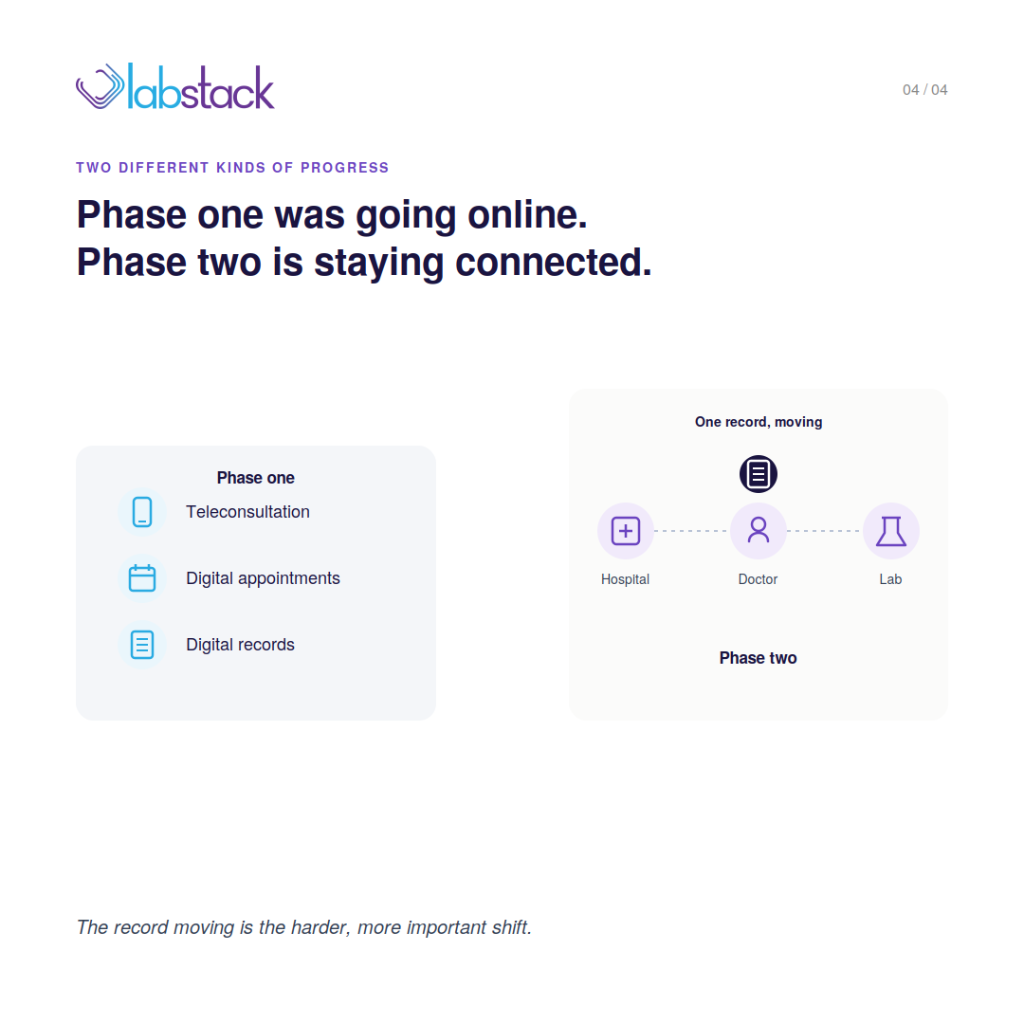
The first phase of India's digital transformation of healthcare in India was largely about putting healthcare online. Teleconsultations proved that a doctor could reach a patient remotely. Digital appointments proved that patients could access providers without calling a clinic. Digital records proved that health information did not have to remain on paper.
The next phase is more ambitious. It is about making these different pieces work together.
A patient may discover a doctor digitally, book an appointment, consult in person or remotely, have a diagnostic test performed elsewhere, receive a digital report, share that information with another doctor and continue treatment without carrying a physical file between providers. India's digital healthcare infrastructure is explicitly being built around this kind of interoperability rather than keeping every healthcare interaction inside one isolated platform — arguably the clearest answer available today to what the future of digital healthcare in India actually looks like.
The numbers from the last five years make one thing clear: India did not simply digitise the doctor's practice. It started digitising the healthcare network around the doctor — building toward something closer to a single integration layer and connected provider workflows across the system, rather than every hospital, lab and platform maintaining its own separate digital footprint.
India did not simply digitise the doctor's practice. It started digitising the healthcare network around the doctor — building toward something closer to a single integration layer and connected provider workflows across the system.
And that may be the more important transformation to watch as the evolution of digital healthcare in India continues to shape the healthcare infrastructure underneath the doctor's own practice over the next five years.