
Nutrition Is Becoming More Personalised. Technology Is Changing How That Happens.
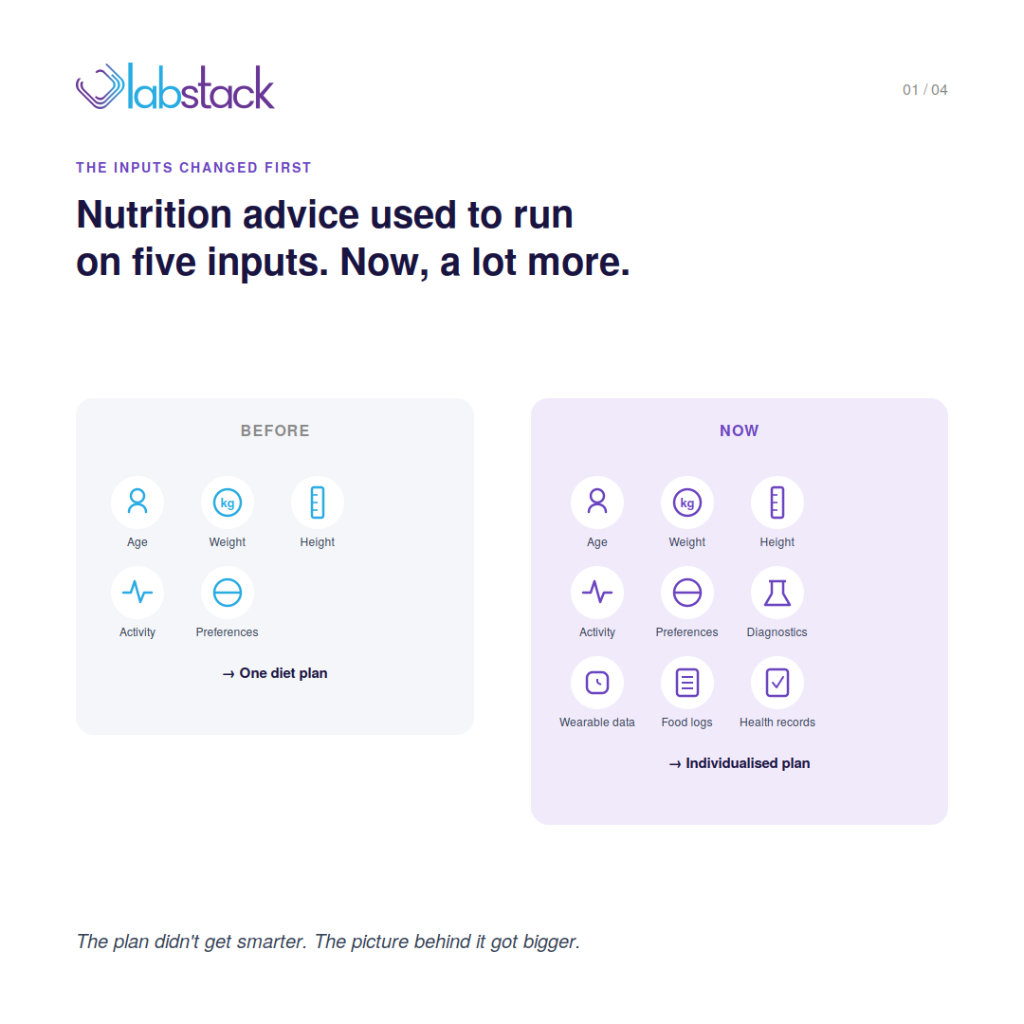
For a long time, nutrition advice was built around a relatively small set of inputs: age, weight, height, activity level, food preferences and whatever a person shared during a consultation. A nutritionist would understand the individual, create a diet plan and make adjustments during follow-up appointments. The model worked, but it depended heavily on periodic conversations and the accuracy of what the patient could remember and report — a far cry from what personalised nutrition in India is starting to look like today.
That model is changing. Nutrition is increasingly being shaped by health records, diagnostic results, food tracking, wearable devices, continuous health measurements and digital monitoring — the raw material of data-driven nutrition. The shift is not simply from paper diet plans to mobile apps. It is from making recommendations using information available during a consultation to building genuinely individualised nutrition plans from a much larger and continuously changing picture of an individual's health.
The Biggest Change Is the Amount of Health Data Available to a Nutritionist
A nutritionist today can potentially work with information that was difficult to collect consistently five years ago. A patient's diagnostic reports, health history, activity patterns, food logs and wearable measurements can all contribute to understanding their health — the practical foundation of digital nutrition in India.
India's digital-health infrastructure is making this broader health picture increasingly possible. The ABDM Personal Health Record framework allows health information from multiple sources, including laboratory reports and treatment records, to be linked to an individual's health account and shared with healthcare providers with consent — a working example of nutrition and digital health reinforcing each other.
At the same time, nutrition technology itself is becoming more sophisticated. ICMR's National Institute of Nutrition has been developing digital nutrition tools including Nutrition Atlas 2.0, NutriAIDE and the NIN 2.0 app, with applications covering dietary tracking, nutrition tracking and data visualisation. ICMR has also specifically identified AI dietary tracking, wearable data, biomarkers and personalised nutrition applications as areas for technological development.
The Diet Plan Is Becoming a Starting Point, Not the Whole Service
The traditional nutrition consultation often produced a plan that the patient was expected to follow between appointments. The nutritionist might only discover weeks later whether the plan actually worked, whether the patient followed it or whether their health indicators changed.
Digital nutrition tracking changes that feedback loop. A patient's food intake, activity, weight or other health measurements can potentially be tracked between consultations instead of being reconstructed from memory during the next appointment — the operational shift behind how technology is changing nutrition care more broadly.
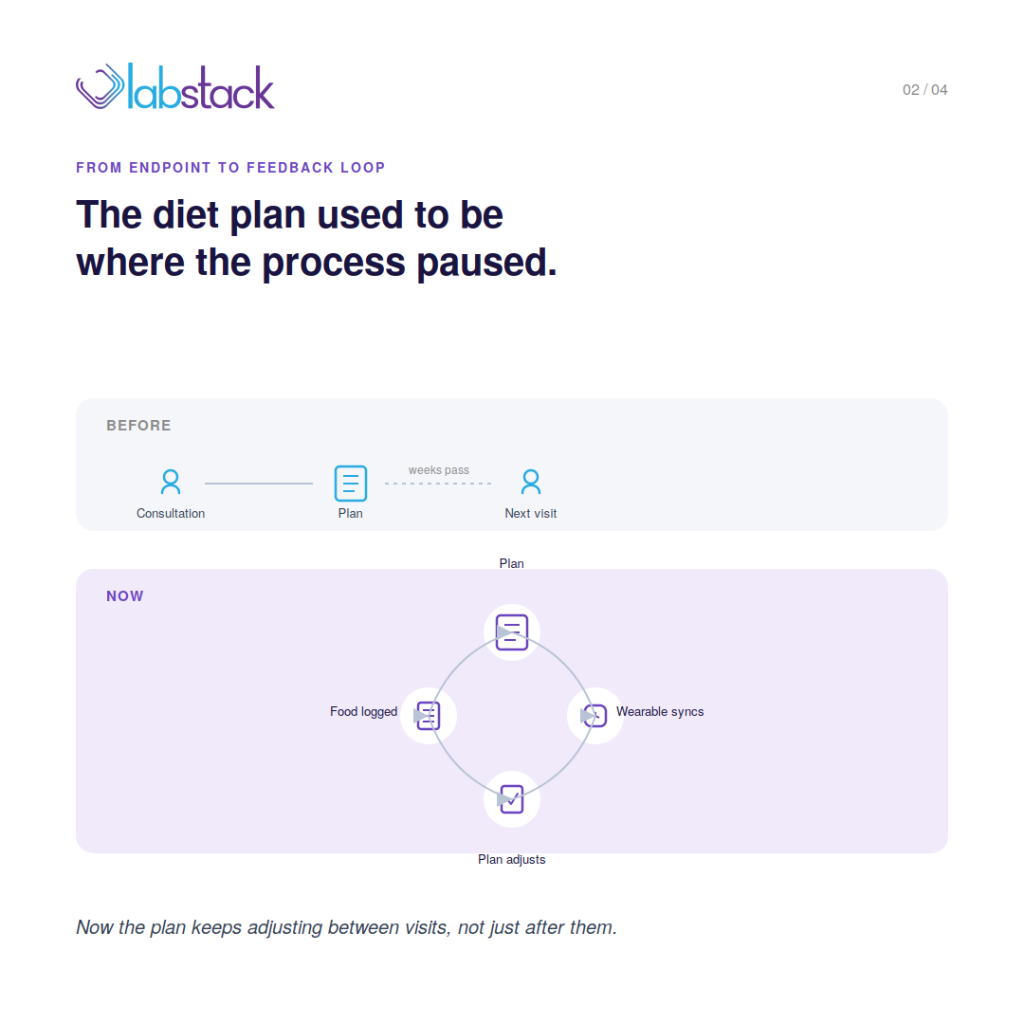
That creates a different model of nutrition care, closer to genuine digital nutrition care than a periodic chart hand-off. The professional can start with a plan, observe what happens after the plan is implemented and adjust the intervention based on new information. The value is no longer only in creating the initial diet chart. It increasingly lies in interpreting changing data and continuously adapting the plan to the individual — an early form of remote nutrition coaching built around ongoing signal, not just the next appointment.
Personalisation Is Moving Beyond "One Diet for Everyone"
Nutrition has always been personal in principle. A good nutritionist does not give every person the same diet. What technology changes is the amount of information available to make that personalisation more precise, moving practice closer to genuinely personalised diet plans rather than templated ones.
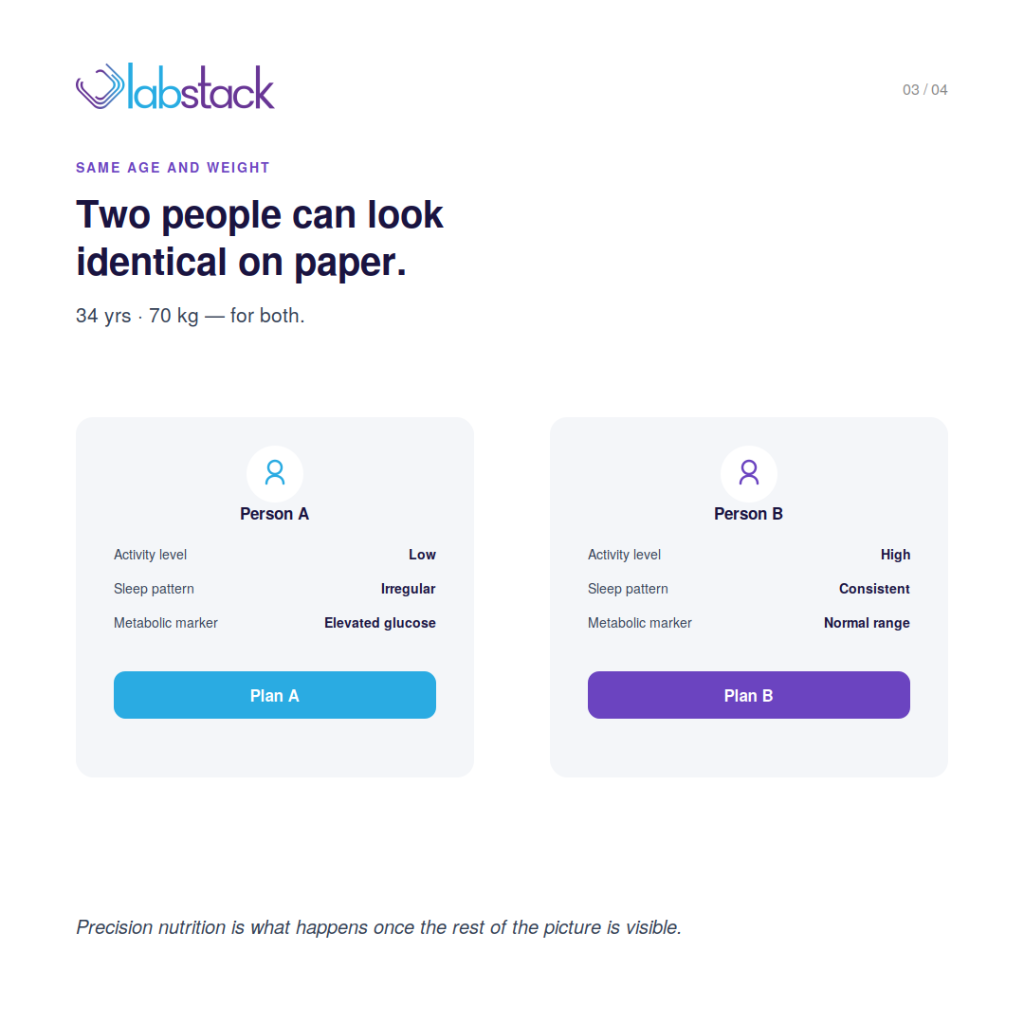
Two people can have the same age and weight but very different health histories, activity levels, dietary patterns and metabolic markers. When more of that information becomes available, recommendations can move further away from generic diet plans and closer to the individual's actual health profile — the essence of personalised nutrition care, and a fair way to frame personalised healthcare more broadly.
This is also why the term precision nutrition is becoming more prominent — a natural answer to what precision nutrition actually means in practice. ICMR's current nutrition-technology initiatives specifically identify personalised and precision nutrition applications that combine information such as genomics, wearables and user-provided data to develop individualised recommendations.
The technology does not replace the nutrition professional's judgement. It gives the professional more information with which to apply that judgement.
Wearables Are Turning Nutrition Into a Continuous Health Conversation
Wearables have changed the type of health information people can generate outside a clinic. Activity, sleep, heart rate and other measurements can be collected continuously rather than only during occasional healthcare interactions — the clearest example yet of wearable health data and nutrition working together.
The significance for nutrition is that food does not exist independently from the rest of a person's lifestyle. Eating patterns interact with activity, sleep, weight and metabolic health. When those signals can be viewed together, nutrition professionals have a richer picture of what is happening between consultations, a real answer to how wearables are used in nutrition day to day.
India's digital-health infrastructure is already moving toward this type of connected monitoring. The ABDM ecosystem includes support for smart-device and wearable connectivity, fitness tracking and personalised health monitoring — one visible layer of the healthcare infrastructure now being built for wearables in nutrition care.
The important change is not that every nutritionist will suddenly use every available data source. It is that the industry now has the infrastructure to make nutrition increasingly data-informed rather than dependent only on occasional self-reporting.
AI Is Entering Nutrition, But It Does Not Replace the Nutritionist
AI in nutrition is also beginning to take shape through dietary tracking, food analysis, recommendation systems and personalised health applications. ICMR's recent nutrition work specifically includes AI-based dietary tracking and technology for personalised nutrition — an early, credible answer to how AI is being used in nutrition in India specifically, rather than as a generic global trend.
But there is an important distinction between generating a recommendation and providing healthcare guidance. A system can identify patterns in food or health data, but a qualified professional still has to understand the person's broader context, determine what information is clinically relevant and decide how recommendations should be applied.
This makes the emerging model less about replacing nutritionists with AI-powered nutrition tools and more about giving nutritionists better tools for collecting, interpreting and acting on information.
The Consultation Is Becoming One Part of a Larger Nutrition Journey
The larger digital-health transformation is also changing where nutrition fits within healthcare. Nutrition does not exist separately from diagnostics, doctors, pharmacies and other healthcare services. A person may receive a diagnosis from a doctor, undergo laboratory testing, consult a nutritionist, monitor their progress and return to the doctor with new health information.
India's ABDM infrastructure is designed around precisely this broader model of connected healthcare. Its Personal Health Record system can bring together health data from multiple facilities, while its ecosystem includes doctors, clinics, diagnostic laboratories, pharmacies and other healthcare facilities — a working example of connected provider workflows operating at national scale.
For nutritionists and health coaches, this creates an opportunity to move from operating as an isolated service to becoming part of a more connected healthcare journey.
The Next Stage of Personalised Nutrition Will Be More Continuous
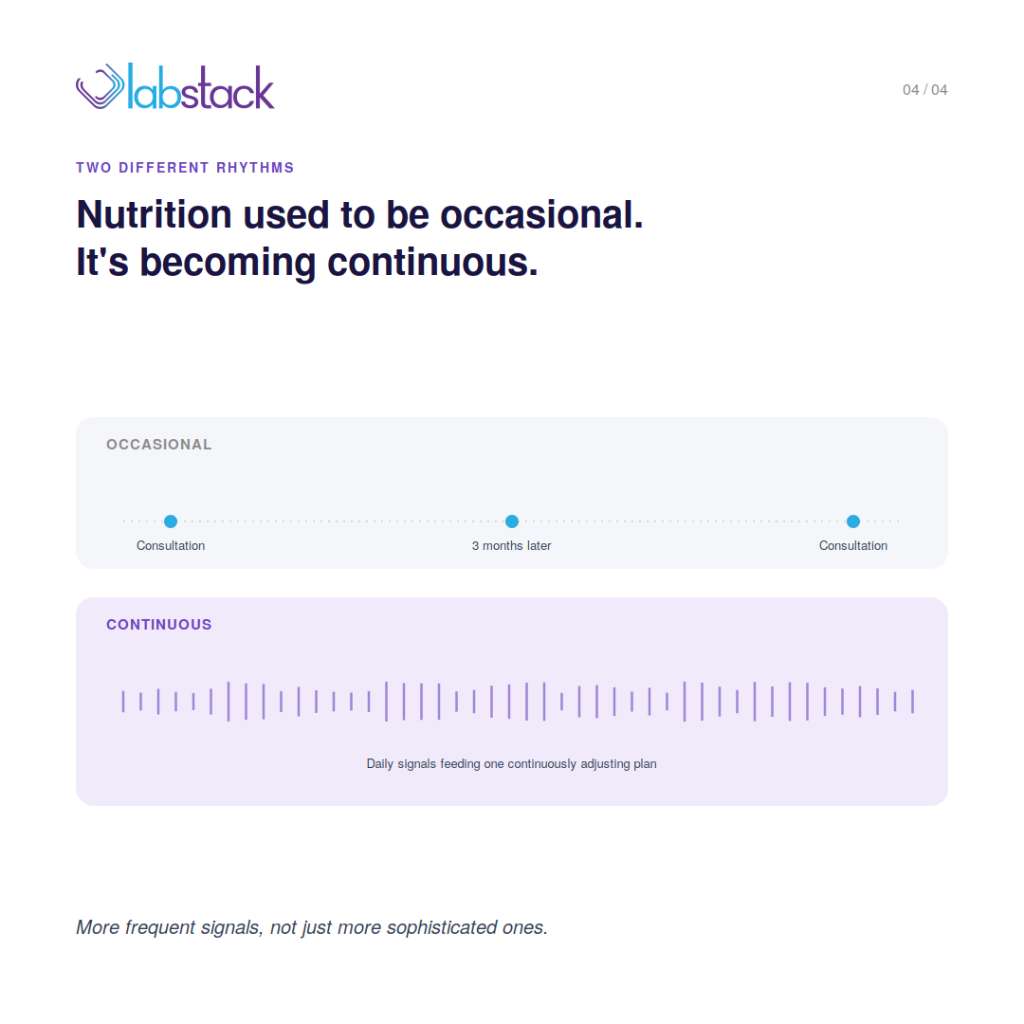
The direction of the industry is becoming clear. Nutrition is moving from a model where information is collected during occasional consultations toward one where information can be collected continuously and used to refine care over time — the clearest sense yet of what the future of personalised nutrition actually looks like in India.
The technology behind this shift is already being built: digital health records, interoperable healthcare infrastructure, dietary tracking, wearable devices, AI-assisted analysis and personalised nutrition tools. India's national digital-health ecosystem now provides something close to a single integration layer for linking health records across providers, while ICMR is actively developing digital and AI-enabled technology and personalised nutrition applications — real material for future nutrition data analysis, not just a concept.
The nutritionist's role therefore does not become less important as technology improves. It becomes more informed.
The next generation of nutrition will not be personalised because a better diet chart was created. It will be personalised because the professional can understand more about the person, track what changes over time, and continuously adapt care around that individual.
A fair answer, ultimately, to what data can be used for personalised nutrition once the infrastructure behind it is actually built.