
The Rise of Home Healthcare Is Changing Where Nurses Work
For a long time, nursing in India was strongly associated with hospitals, clinics and other fixed healthcare facilities. A nurse's work generally meant going to one healthcare facility, caring for patients there and working within the infrastructure of that institution. Home-based nursing existed, but it was a relatively small part of the organised healthcare system. That picture started changing rapidly around 2020, as home healthcare in India began scaling into something far bigger than an occasional service. India's home healthcare market in India was estimated at approximately $6.2 billion in 2020, with NITI Aayog projecting it could reach $21.3 billion by 2027. The same analysis identified at-home nursing, medical consultations, home diagnostics and technology-enabled care as components of this emerging market.
The change was not simply caused by COVID-19. The pandemic exposed how dependent healthcare was on fixed facilities when hospitals were under extreme pressure, but the underlying reasons for home-based healthcare existed before it. India's ageing population, increasing chronic disease burden, rising healthcare costs and demand for post-operative and long-term care all create situations where patients do not necessarily need to spend every stage of their healthcare journey inside a hospital. The home increasingly became another setting in which professional healthcare at home could be delivered.
Home Healthcare Has Moved From a Small Segment to a Large Healthcare Market
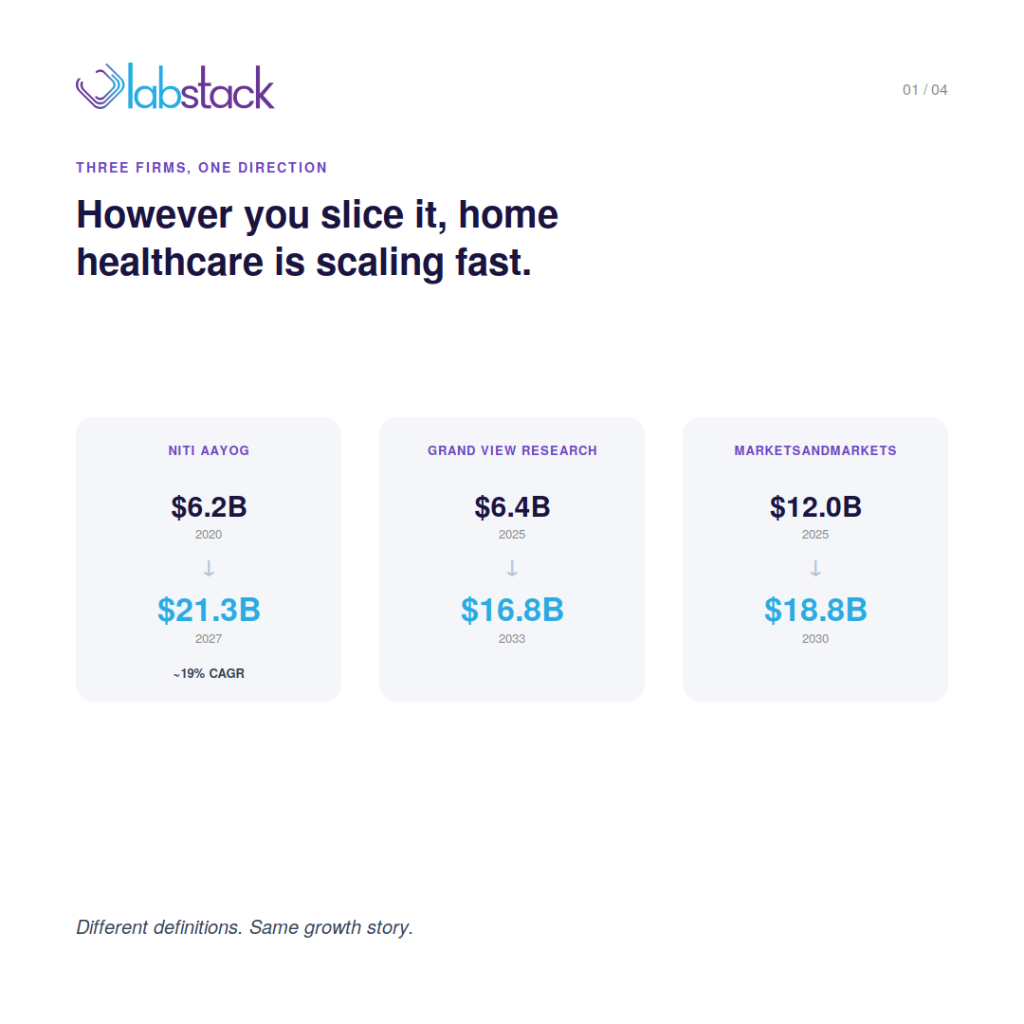
The scale of the change is visible in the market numbers. NITI Aayog estimated India's home healthcare market at $6.2 billion in 2020 and projected it to reach $21.3 billion by 2027, representing an annual growth rate of roughly 19%. More recent market estimates are even larger. Grand View Research estimates the market at $6.4 billion in 2025, projecting it to reach $16.8 billion by 2033, while MarketsandMarkets estimates $12.0 billion in 2025 and projects $18.8 billion by 2030. The estimates differ because the research firms use different definitions and market boundaries, but they point in the same direction: growth of home healthcare in India has become a substantial and expanding part of the country's healthcare economy.
That expansion matters for nurses because nursing is one of the services that makes home healthcare possible. Home healthcare is not simply a hospital service relocated to a patient's house. It requires professionals who can independently deliver clinical care in an environment where the hospital infrastructure, equipment and immediate support systems are not physically present. As the organised home care services in India market expands, the setting in which nursing can be delivered expands with it.
The Nurse's Workplace Is No Longer Necessarily a Healthcare Facility
A nurse providing home healthcare can now be involved in post-operative recovery, chronic disease management, elderly care, wound care, rehabilitation support, palliative care and higher-acuity services delivered at home. NITI Aayog's analysis specifically identifies home nursing services, post-operative care and technology-enabled critical care as parts of India's expanding home healthcare ecosystem — a clear, official answer to what the role of nurses in home healthcare actually looks like today.
This changes what "availability" means for the nursing workforce in India. In a hospital, a nurse works within a defined facility, shift structure and patient environment. At home, the professional moves between locations and provides care within each patient's individual environment. The work therefore becomes more distributed. Instead of one healthcare facility concentrating patients and professionals in the same physical location, healthcare demand is spread across individual homes.
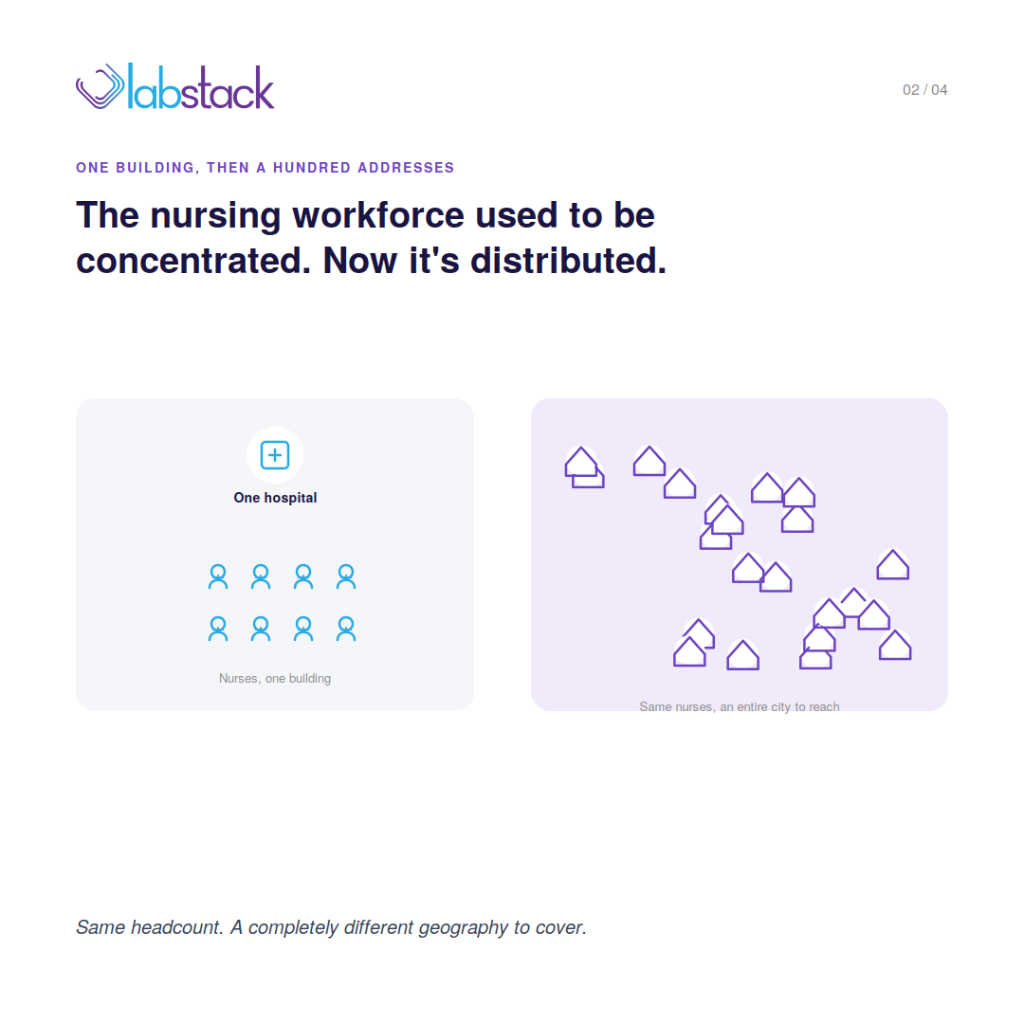
That is a fundamental change in the structure of healthcare delivery.
India's Ageing Population Is Creating More Demand for Care Outside Hospitals
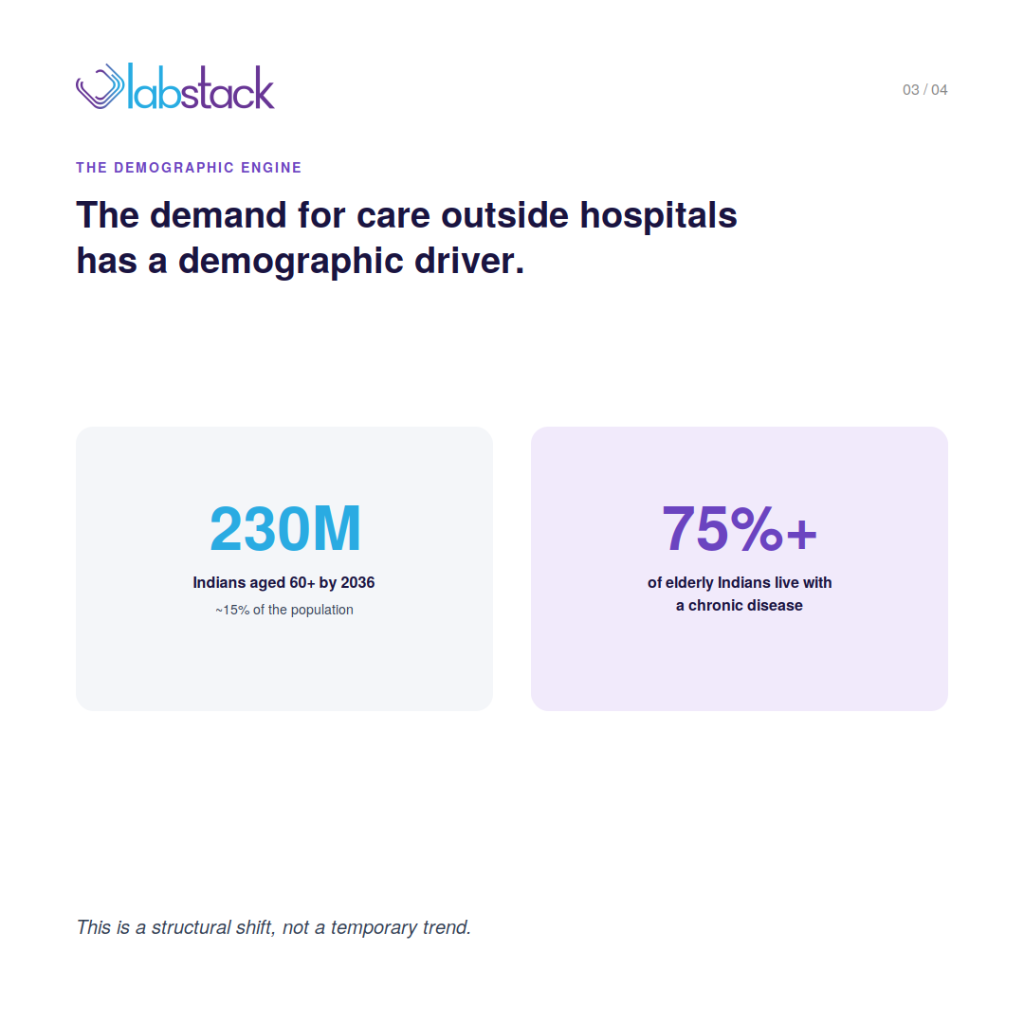
One of the strongest forces behind this shift is demographics — and it's a large part of why home healthcare is growing in India as fast as it is. NITI Aayog notes that more than 75% of elderly people in India suffer from chronic diseases, creating a significant need for long-term and home-based care. India's elderly population is also continuing to expand. Current estimates suggest that the number of Indians aged 60 and above could reach around 230 million by 2036, accounting for approximately 15% of the population.
An ageing population changes the type of healthcare people need. Not every requirement involves an acute hospital admission. Many involve repeated nursing support, medication management, recovery assistance, chronic disease monitoring, rehabilitation or ongoing care.
That creates a healthcare environment in which nurses are needed not only where patients are admitted, but also where patients actually live.
Chronic Care Is Making Healthcare Less Episodic
Hospital care is often organised around episodes: admission, treatment and discharge. Chronic conditions are different. Diabetes, cardiovascular disease, neurological conditions and age-related health problems can require months or years of monitoring and support.
Home-based healthcare fits naturally into this longer model of care. A patient can leave a hospital but continue receiving professional nursing support at home. A person managing a chronic condition can receive regular care without repeatedly travelling to a healthcare facility. A family caring for an elderly relative can access professional support without moving that person into institutional care — one of the clearest answers to why healthcare is moving into the home at this pace.
This creates a larger role for nurses between major clinical encounters. The hospital may make the diagnosis or perform the procedure, but professional care can continue in the patient's home long after the hospital visit has ended.
Technology Is Making Home-Based Care More Clinically Connected
The growth of home healthcare is happening alongside another major change: the increasing availability of digital health and remote monitoring technology.
Home healthcare providers can now use digital care plans, mobile applications, remote patient monitoring and connected devices to keep track of patients outside traditional facilities. Recent industry analysis identifies remote monitoring, telehealth and home diagnostic services as important factors supporting the expansion of India's home healthcare market — early signs of a genuine healthcare infrastructure forming around the home rather than only the hospital.
This matters because the traditional argument against home healthcare was that hospitals contain the equipment, information and professionals needed to monitor patients safely. Technology is gradually reducing some of that distance. A nurse can provide physical care at home while other parts of the patient's care can be supported remotely by doctors, monitoring systems and connected healthcare platforms.
The home is therefore becoming less isolated from the healthcare system.
The Healthcare Workforce Has to Become More Distributed
When healthcare was concentrated primarily inside hospitals, workforce planning could also be concentrated around hospitals. The location of the patient and the location of the healthcare professional were largely the same.
Home healthcare changes that relationship, and it's central to how home healthcare affects the nursing workforce specifically. A nurse may have to travel between several patients in different parts of a city, part of an increasingly mobile healthcare workforce. A phlebotomist may need to complete home sample collection in India across multiple homes before those samples reach a central laboratory — a form of mobile phlebotomy that barely existed at scale a decade ago. A healthcare organisation may have patients requiring services across an entire city rather than inside one facility.
The growth of home healthcare therefore creates a different kind of home healthcare workforce infrastructure. It is not enough to have qualified professionals. Healthcare organisations also need ways to coordinate who is available, where they are located, what services they can provide and which patient requirements they can reach.
That becomes increasingly important as the industry moves from individual home visits toward larger, organised networks of home-based care, supported by a genuine home nursing workforce rather than ad hoc individual arrangements.
Home Healthcare Is Changing the Definition of Where Care Happens
The important transformation is not that hospitals are becoming less relevant. Hospitals remain essential for emergency care, surgery, intensive treatment and complex medical interventions.
What is changing is what happens around the hospital.
A patient can be diagnosed in a hospital, discharged home, receive nursing care at home, have diagnostic sample collection at home — whether that means phlebotomy at home or broader home blood collection and home diagnostics in India — consult a doctor remotely and return to the hospital when further intervention is required. Different parts of the same healthcare journey can now happen in different locations, which is really how home sample collection is changing diagnostics as much as it is changing nursing.
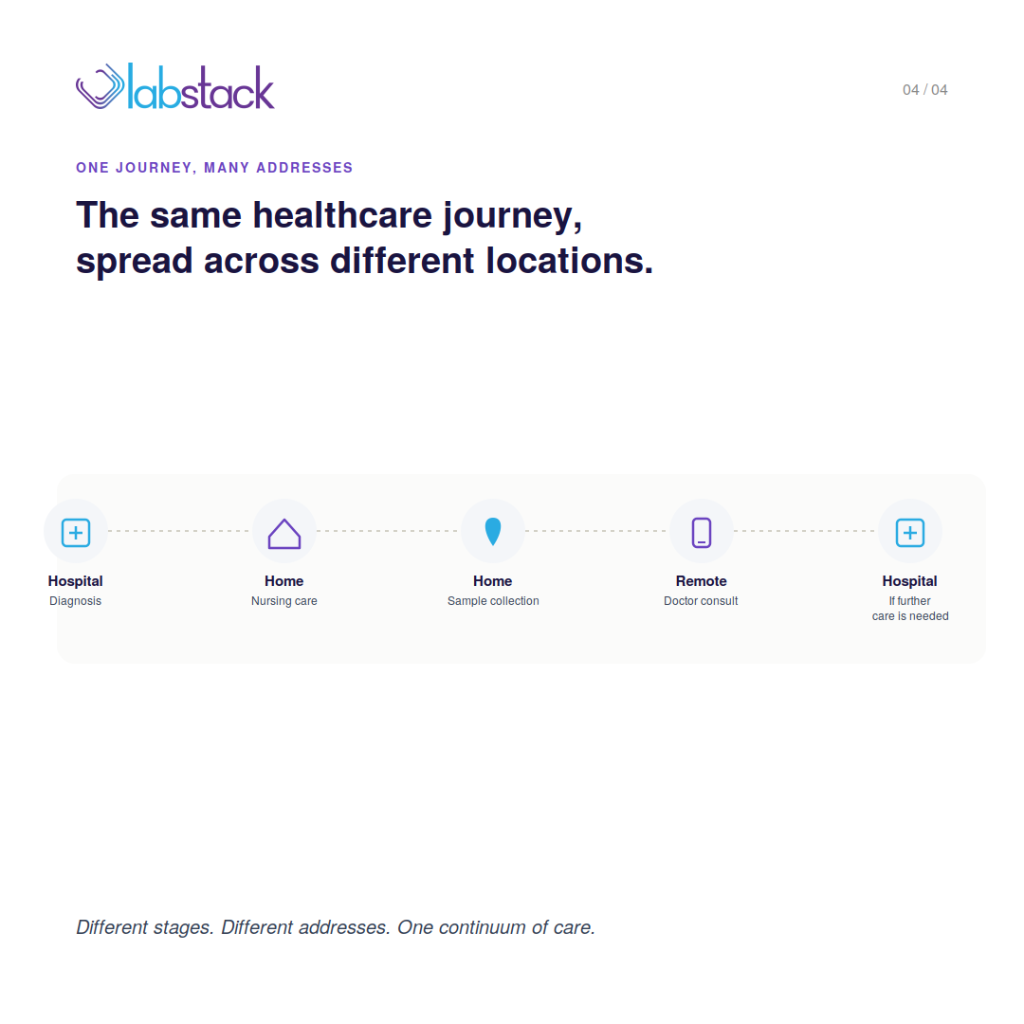
Home healthcare is therefore not simply another healthcare category. It is becoming part of the continuum of care connecting hospitals, doctors, diagnostic laboratories, pharmacies, nurses, phlebotomists and patients — the practical shape of connected provider workflows once care stops being tied to a single address, and closer to a single integration layer than a set of separate arrangements for every home visit.
The Nurse's Workplace Is Expanding With the Healthcare System
The numbers tell the larger story. A market that was estimated at $6.2 billion in 2020 has developed into a multi-billion-dollar industry with double-digit growth projections, driven by ageing, chronic disease, technology and increasing acceptance of care delivered outside hospitals.
For nurses, that means the definition of a healthcare workplace is expanding. The hospital remains one of the most important places where nursing happens, but it is no longer the only one.
As healthcare moves closer to where patients live, the healthcare workforce in India is moving with it. The future of home healthcare in India is about connecting the right nurses to the growing amount of care happening outside the hospital.