
Diagnostic Testing Is Moving Closer to the Patient. What Does That Mean for Labs?
Diagnostic testing in India is no longer limited to patients travelling to a laboratory for every test they need. Home sample collection, neighbourhood collection centres, digital booking and wider diagnostic networks are making diagnostic testing closer to patients than it has ever been. This shift is being driven by changing patient expectations, increasing preventive health testing and the expansion of organised diagnostic providers across different parts of the country — part of a broader move toward decentralised diagnostic testing nationwide. For patients, it means greater convenience. For diagnostic laboratories, it represents something much bigger: a change in how diagnostic capacity is built, accessed and delivered.
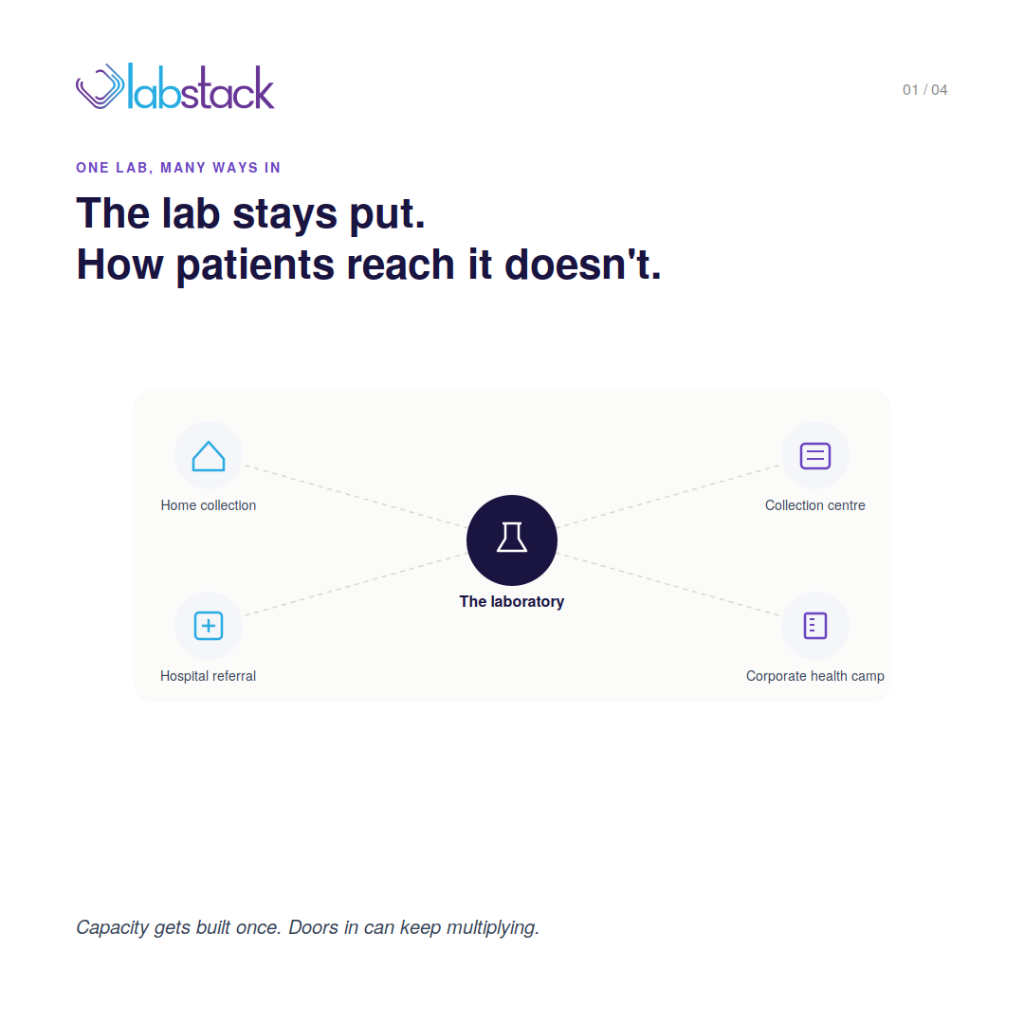
The laboratory itself still sits at the centre of the process. Samples may ultimately be processed in a central or specialised facility, but the patient's interaction with diagnostics can now begin somewhere else. A phlebotomist can perform home blood sample collection, a collection centre can serve a neighbourhood, a hospital can generate a testing requirement, or a corporate health programme can organise testing for hundreds of employees. The physical laboratory and the point where the patient accesses the service no longer have to be the same place.
The Laboratory Is Becoming a Network, Not Just a Location
The traditional diagnostic model was relatively straightforward. A laboratory operated from a physical location, patients came there, samples were collected and testing was performed. As diagnostic businesses expand, that model is increasingly being supplemented by collection centres, home diagnostic services and other access points that extend the laboratory's reach — the two halves of a proper central laboratory and collection centres model working together.
This allows a diagnostic provider to serve a much larger geographic area without requiring every patient to visit the central laboratory. A single laboratory can become the processing backbone for samples collected across multiple locations. The result is a more distributed diagnostic network in which collection and testing can happen in different places while remaining part of the same service.
This distinction matters because expansion no longer has to mean building a complete laboratory in every new market. A provider can extend its reach through the right combination of central testing infrastructure and local access points — a working answer to how diagnostic labs are expanding beyond physical centres.
Patients Are Changing What They Expect From Diagnostic Services
Convenience has become an increasingly important part of how people access healthcare. Patients who can book diagnostic testing at home digitally and have a trained professional perform at-home diagnostic testing have less reason to travel to a laboratory for routine testing. The same applies to employees participating in corporate health programmes or patients who need repeated monitoring and would otherwise have to make frequent trips to a collection centre.
This does not mean physical laboratories are becoming less important. It means the patient's experience of a laboratory is changing. The laboratory may be the place where the sample is processed, but it does not necessarily need to be the place where the patient interacts with the diagnostic provider — which is really why home sample collection is growing as fast as it is.
For diagnostic businesses, that creates an opportunity to compete not only on the tests they can perform, but also on how easily patients and healthcare organisations can access those capabilities.
More Access Points Can Expand the Reach of Existing Diagnostic Infrastructure
A diagnostic provider does not necessarily need to replicate its entire testing infrastructure every time it enters a new geography. A central laboratory with specialised equipment and trained technical staff can support samples arriving from multiple collection points, forming a genuine diagnostic collection centre network around one processing core.
This creates a different approach to geographic expansion. Instead of asking only where the next laboratory should be built, providers can ask where additional collection capacity is needed, where home laboratory testing can be offered, and which locations can connect new demand to existing testing infrastructure — the practical version of how diagnostic labs can expand their geographic reach without duplicating machines in every city.
For growing diagnostic networks, this can make diagnostic network expansion more flexible. The physical testing capacity can remain concentrated where it is most efficient while access to that capacity becomes increasingly distributed — scaling diagnostic testing through collection centres rather than through repeated capital investment.
Home Collection Is Changing More Than Patient Convenience
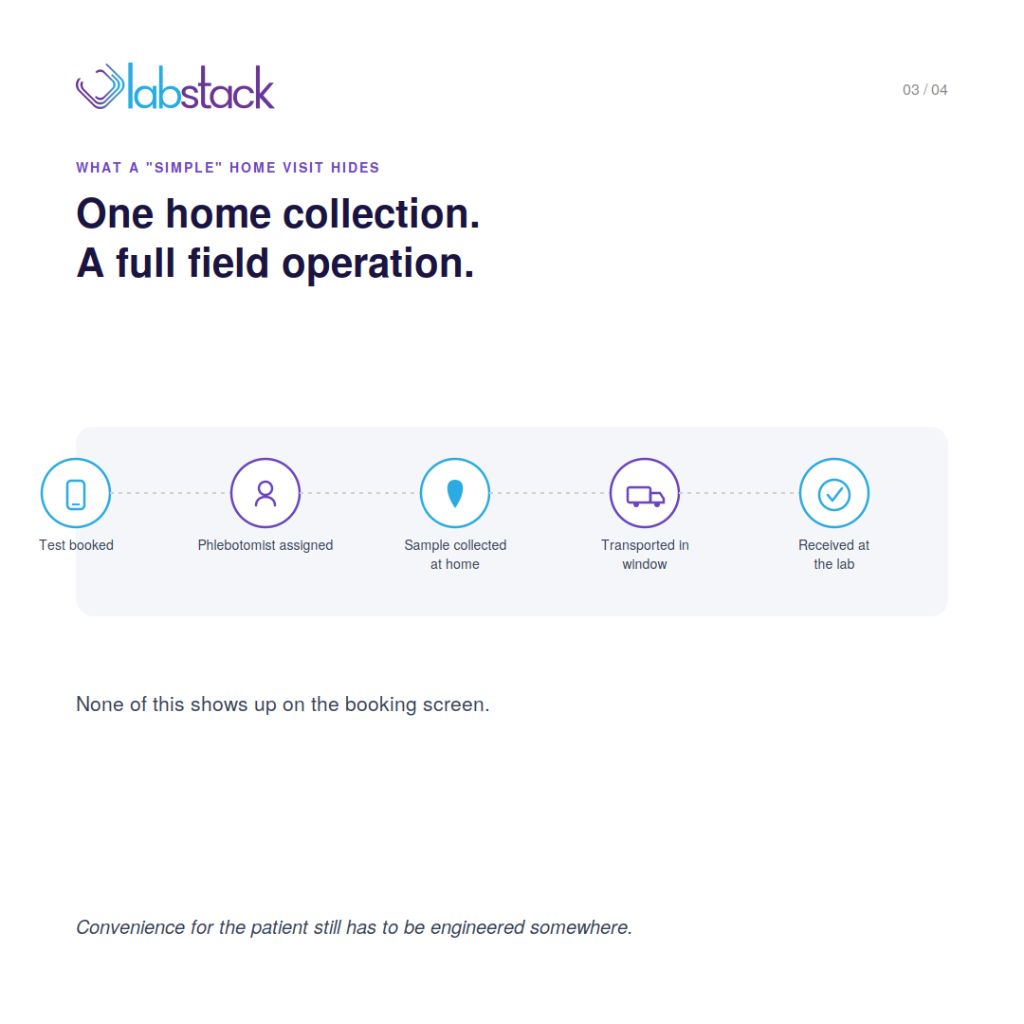
Home pathology testing is often discussed as a convenience feature, but its impact on diagnostic operations is broader. Once diagnostic sample collection at home happens outside the laboratory, the diagnostic provider has to coordinate a much larger field operation involving patient locations, appointment times, trained phlebotomists, sample handling and transportation — the operational reality behind how home diagnostic testing works once you look past the booking screen.
The laboratory therefore becomes responsible for a chain that extends beyond its own facility. A successful home diagnostic testing in India service requires the sample to be collected correctly, handled appropriately and transported within the required conditions before it reaches the testing facility.
This means that as diagnostic services move closer to patients, the operational network around the laboratory becomes just as important as the laboratory itself.
The Growth Opportunity Is Not Only More Tests. It Is More Ways to Reach the Same Testing Capacity.
Diagnostic growth is often associated with increasing the number of tests a laboratory can perform. But a laboratory can also grow by improving access to diagnostic testing — increasing how many healthcare requirements can reach its existing capabilities.
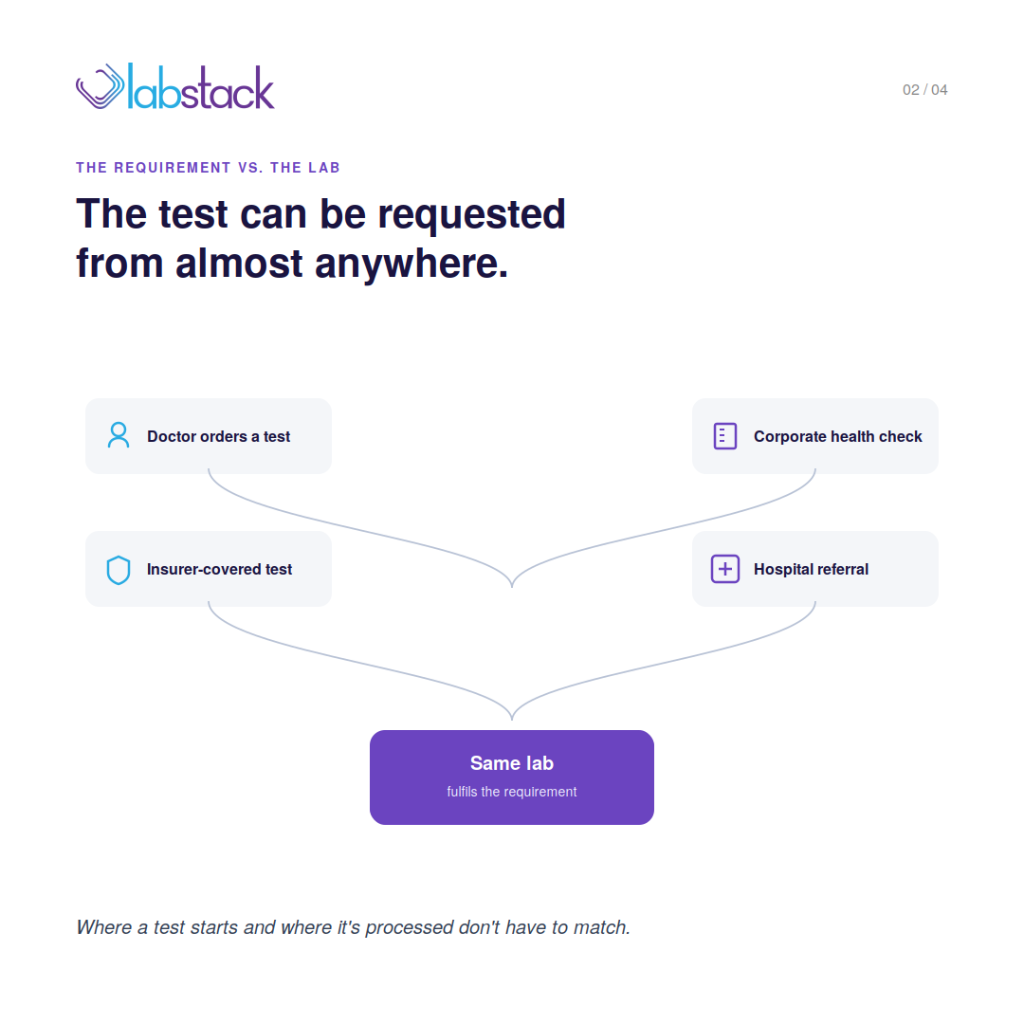
A corporate health programme may generate hundreds of testing requirements at once. A hospital may need diagnostic services for its patients. A doctor may require laboratory investigations for patients under their care. An insurer or TPA may generate covered healthcare requirements. A healthcare platform may coordinate testing across multiple locations — all part of a wider diagnostic network for healthcare providers that a single lab can plug into.
The testing requirement may originate outside the laboratory, but the laboratory can still fulfil it.
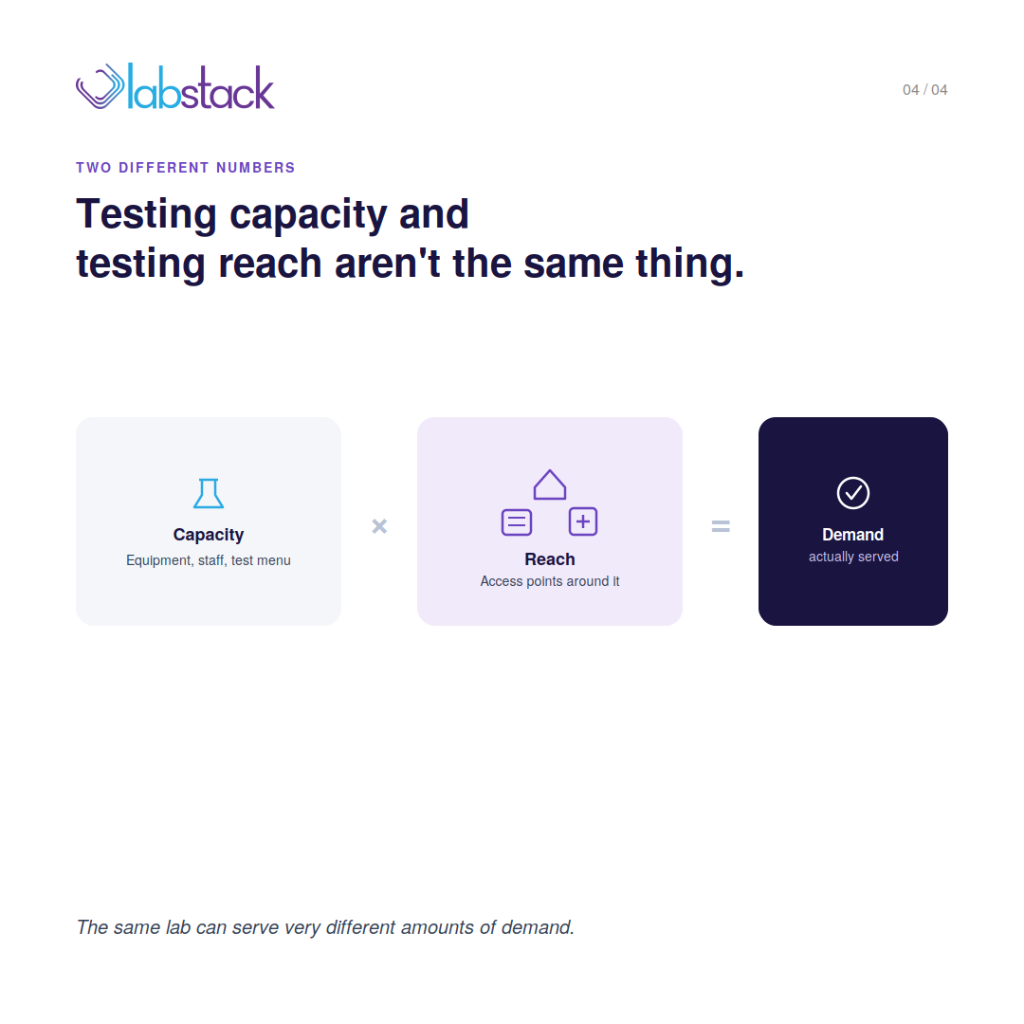
This creates a distinction between testing capacity and patient access to laboratory testing. A laboratory can have the technology and technical capability to perform a test while still having limited reach into the organisations and healthcare networks that generate testing requirements.
Diagnostic Networks Will Become More Important as Healthcare Becomes More Connected
Diagnostics increasingly sits between different parts of healthcare. A doctor may order a test, a phlebotomist may collect the sample, a laboratory may process it, an insurer may cover the service and another healthcare provider may use the result to determine the next step in care — the everyday shape of decentralised diagnostics in India as it actually operates.
As these interactions increase, diagnostic providers need to operate beyond the boundaries of their own facilities. Their ability to connect with hospitals, doctors, corporates, insurers, TPAs and healthcare platforms can become an important part of their growth, and it's worth asking directly: how does a diagnostic lab network work once a provider depends on more than its own four walls?
The diagnostic laboratory of the future is therefore unlikely to be defined only by its machines, test menu or physical footprint. Its reach, collection network, provider relationships and ability to participate in broader healthcare workflows will also determine how much of the surrounding diagnostic healthcare access in India it can actually serve.
What This Means for Diagnostic Labs
Moving diagnostic testing closer to patients does not make the laboratory less important. It changes where the laboratory creates value — a fair way to answer how diagnostic testing is changing in India for providers, not just patients.
The central laboratory remains responsible for the technical capability, quality and processing of tests. Around it, however, a larger network is emerging to make those capabilities accessible through home collection, collection centres, hospitals, doctors, corporate programmes and other healthcare channels — steadily making diagnostic testing more accessible and expanding diagnostic testing coverage even into markets once considered diagnostic testing beyond metro cities.
For diagnostic providers, this creates a broader growth opportunity. They can expand their reach without treating every new geography as a requirement to build a completely new laboratory. They can use existing testing infrastructure more widely by connecting it to more patients and more healthcare organisations — ideally through something closer to a single integration layer and connected provider workflows than a separate arrangement for every hospital, corporate or insurer they work with.
What is the future of diagnostic labs in India? Less about building more laboratories, and more about making the capabilities of each laboratory accessible to more of the healthcare infrastructure and healthcare demand already around it.